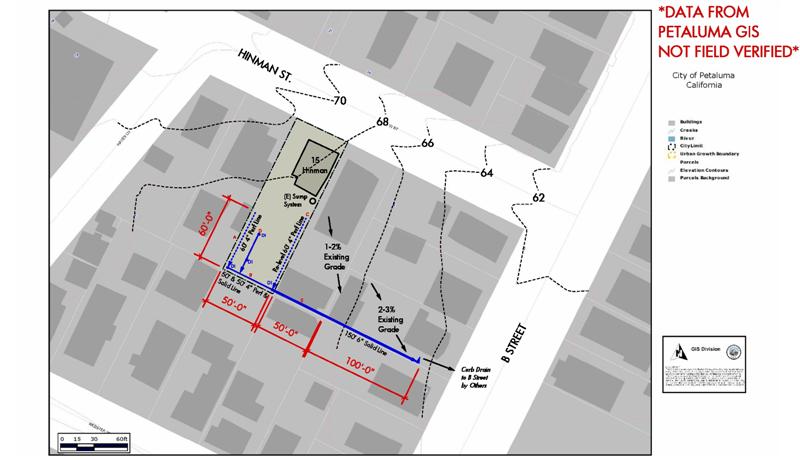
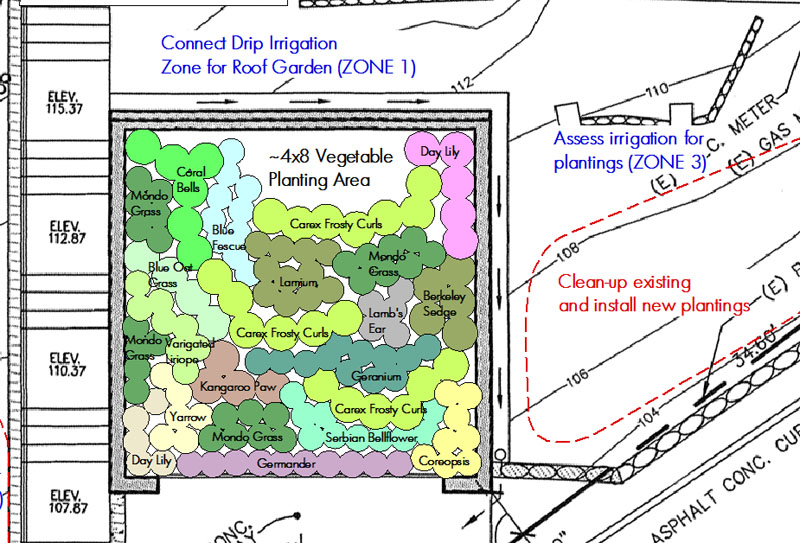
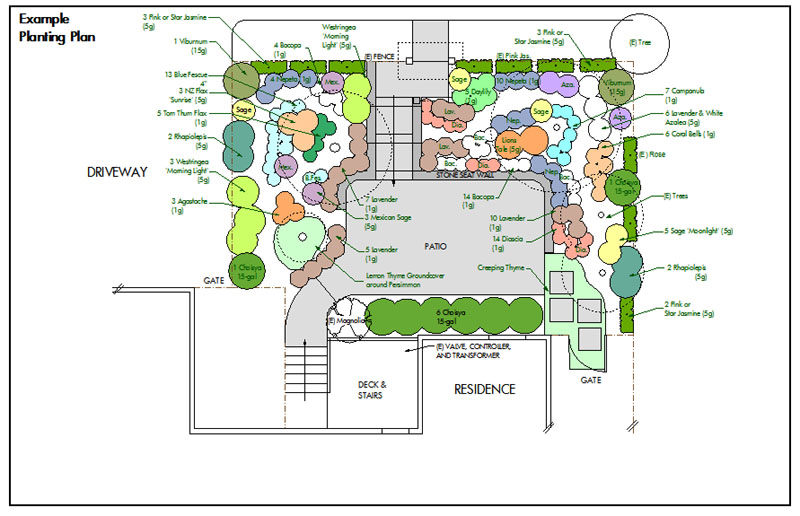
Here is a drainage plan for a project we are bidding on in Petaluma. We used the great information at Petaluma GIS. The GIS interface is an online digital mapping application for the whole city of Petaluma that shows building locations, parcel boundaries and contours. This type of information is very helpful for projects like this when we are trying to estimate larger distances or distances across one or multiple parcels.
There was another green roof article in this month’s NorthBay Biz, Up on the Roof, profiling the rooftop installation at the Academy of Sciences in San Francisco and a couple of projects in the North Bay that is worth a look.
After our earlier profile of the Watershapes article of the same name, a new rule for all those green industry columnists, you must title your articles something other than Up on the Roof.
I just spent the weekend meeting with vendors planning an upcoming event. What fun to be on the other side of the table during the consultation process and see the presentation and portfolio elements, which elements worked and which didn’t.
For all those homeowners considering garden roofs, this rapidly developing specialty of landscape construction offers many sustainable benefits beyond just the wow factor of directly integrating garden spaces into residential architecture. The reduction in many of the ongoing heating, cooling, and insulation costs can help pay for the added cost of a green roof installation.
There was a great article in this month’s Watershapes Magazine on roof gardens. It’s a good primer and background on green roof types and the additional insulation and HVAC benefits to the insulation green roofs provide. (Catch it before the end of this month with the free on-line version)
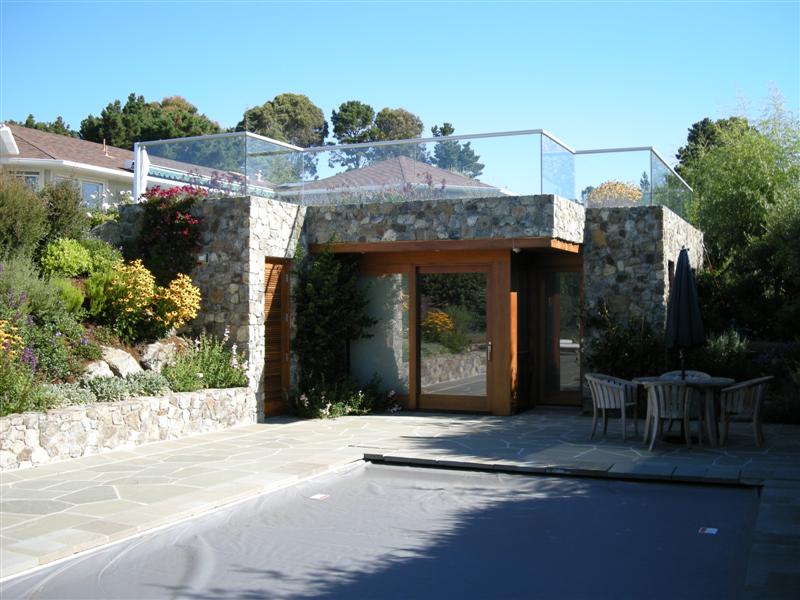
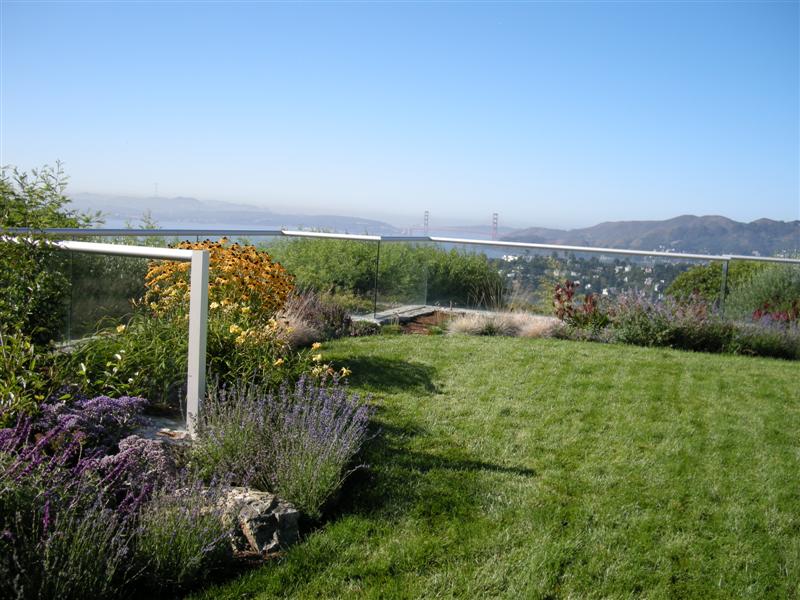
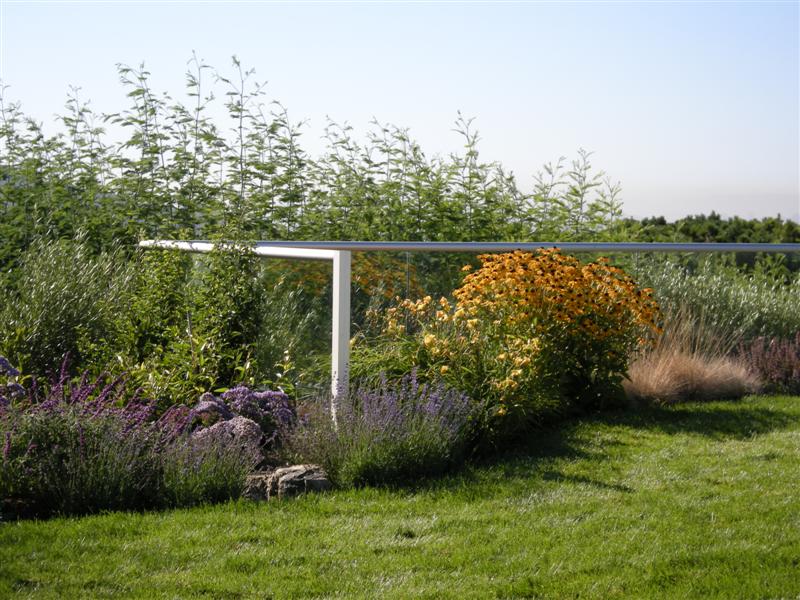
Below is a gallery of a recent roof garden in Tiburon. We worked with Caletti Jungsten Construction and Pedersen Landscape Architecture to create a green roof for this unqiue pool house. See more in our Garden with a View Portfolio.
We have been bidding on a lot of projects lately. On some of those projects we win the bid, and on others we don’t, that’s the nature of the process. One interesting aspect of estimating process as a whole is what I call estimate etiquette. There are two parts to estimate etiquette, that of the contractor and that of the client. Like any aspects of courtesy these are subject to interpretation and depend on the context applied.
In general good etiquette by the contractor means being punctual for meetings, creating a detailed and pertinent estimate, and delivering it in a timely manner. Good etiquette by the client means respecting the time and effort bidding contractors put into estimates on their projects (which can be substantial), and updating clients as to the status of the project and their final decision moving forward.
For our estimates in general, these are done at no charge. They usually include an in personal on-site consultation and subsequent proposal presentation with the creation of a detailed estimate, and often supplementary materials information, specifications or conceptual designs. Client responses to the estimate can vary, but clients are usually either responsive and update the bidding contractors on the status of their project, or they fall off the face of the earth and do not only not update the contractor, but don’t respond to follow-ups via phone, email, carrier pigeon, etc.
Now, all this being said, we aren’t always perfect in the process of soliciting estimates for our projects with sub-contractors. The purpose of emphasizing good estimate etiquette is to help encourage some common courtesy and professionalism on both sides of the estimate process.
This post gives an overview of a volunteer project at the Cotati Co-op Preschool-
Dear Cotati Co-op Families,
I met with the board last night to discuss a volunteer project to re-landscape the Mark Roberts native garden beds at the entrance to the school. Sherry and I have been discussing this work since last year. I own a landscape firm in Petaluma and would coordinate the work and solicit donations to the school of required materials at no cost. The board voted to move forward and discuss in more detail next week at our parent club meeting. I hope this will be a nice enhancement to the front of the building and be a good educational demonstration of native plants.
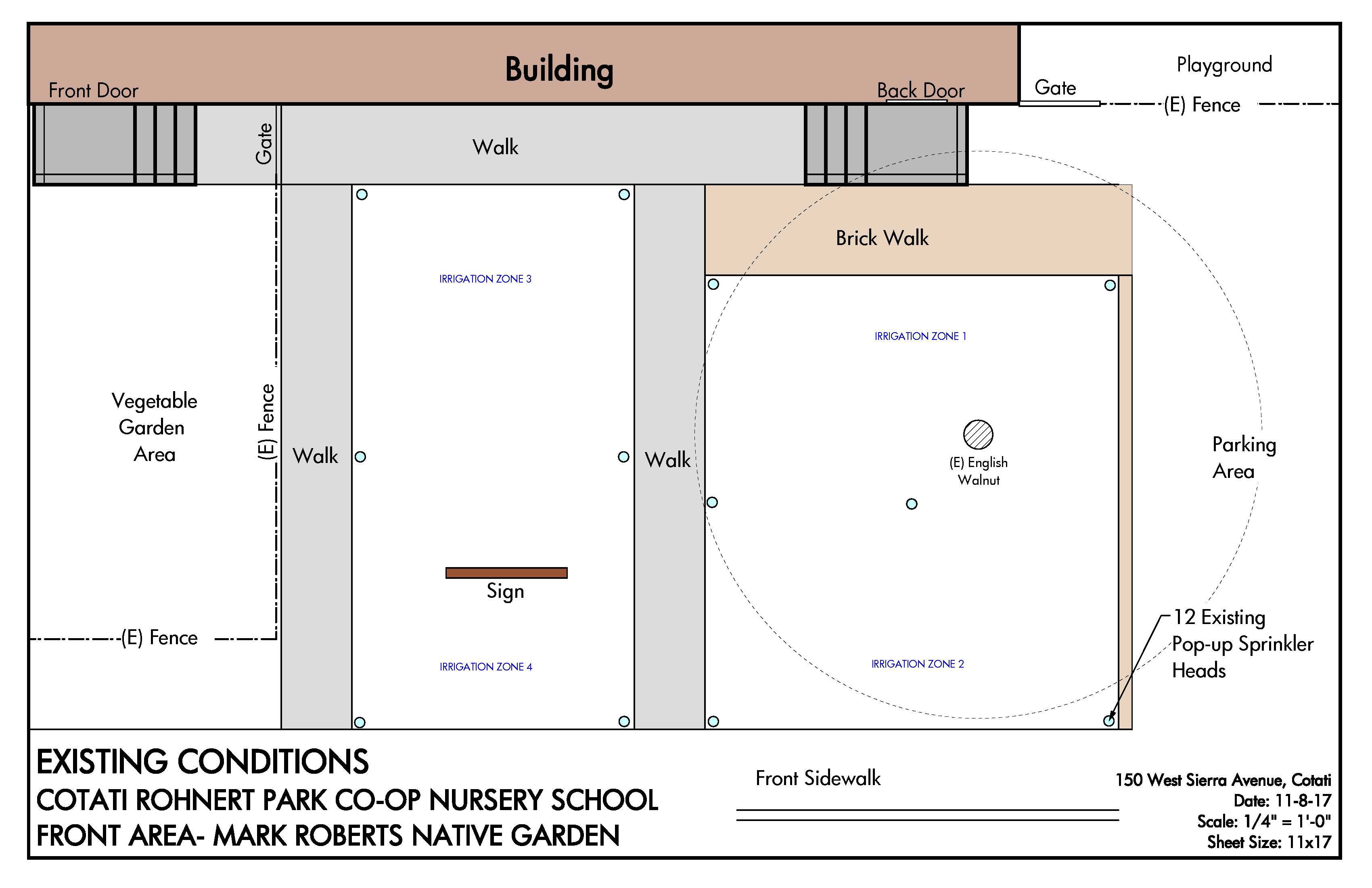
Cotati Co-op Front Landscape Existing Conditions
Planting Overview: The new plantings would be divided into two themes for the existing planter beds. The section under the Walnut tree near the parking lot would be a native grass garden and would feature Deer Grass, Berkeley Sedge, Blue Fescue, and Reed Grass. The section closer to the front entry gate would be the blooming section. Plants here would be low maintenance native perennials featuring California Fuchsia, Artemisia, California native Sage varieties and Yarrow. At the sidewalk lower groundcover plants would replace the existing shrubs, which have become overgrown. You can read more about the plants to be installed in the Plant Palette PDF.
Cotati Co-op Proposed Landscape Plant
Work Scope: The work scope would involve two distinct phases. First would be new plantings, which would require the following steps-
Remove existing plantings
Cap and convert existing spray irrigation to drip irrigation
Prep and grade new beds
Plant new plantings with amended soil and slow release fertilizer
Install new drip irrigation tubing and emitters to all newly installed plants
Install a thick new layer of bark to finish the area, retain moisture, hide drip tubing, and reduce weeds
Install botanical signs giving the common and latin names of newly installed plants.
Fencing Phase: The second phase would be to install a new extension of the perimeter fence to encompass both entry walkways from the front sidewalk, all the way to the parking area. This would have the benefit of enclosing the entire front of the school in a secure yard area and has been on Sherry’s wish list. As part of this work, the existing sign would need to be either relocated closer to the street, or replaced with a higher visibility sign that would face West Sierra Avenue.
Timing: Work would take place over winter break and be completed either sometime in December or January. I estimate 3-4 volunteer days being required for the planting phase, depending on the number of volunteers we have.
I look forward to discussing this more next week.
Michael O’Connell, O’Connell Landscape
(Zoe O’Connell, Butterflies)