Sealing Arizona Flagstone

We received this question from a reader concerning sealers and Arizona Flagstone:

Q: Please advise us as to sealing Rosa Az. Flagstone from the Tucson area. We live in Sacramento, CA. We are installing a small patio of this material on 2″ of crushed rock, then 2″ of sand. We are putting polymeric sand in the joints. 2 people have advised us that it is not necessary to seal the flagstone. They advised that, because the flagstone is so porous, it would use too much sealer. Also, they said that leaving it in it’s porous state would help keep it more breathable for less algae growth. We are a little worried that, without a sealer, it will stain too much, as it is so porous.

Thank you so much for your help!!! My husband is a Tucson native, and we are really excited about this flagstone.

Pat Witzens

A: Pat,

We typically don’t seal Arizona flagstone, as far as the amount of sealer necessary, I wouldn’t doubt the advise you have received. As far as algae comment, we don’t have any experience with sealed vs. unsealed- algae is typical in Arizona because of its porosity, and is best removed with a pressure washer and/or push broom with diluted acid wash (Muriatic pool acid), although in some rare cases this can cause efflorescence in the stone. We have not been impressed with the weathering of some of the stone sealers out there. If you are looking for particular brands, Aldon is one we have used in the past, or you can visit your local stone/masonry supply yard or tile dealer. There are some high end (expensive) sealers out there for stones tiles like travertine, that seem to be better. Remember with any sealer or stain used outdoors, it is exposed to lots of moisture, heat, and sunlight, especially in the hot valley summers, so expect results accordingly.

Good luck with the new stone.

Garden Events for Summer

Summer is fast approaching, and with it an interesting palette of garden
events. As usual Pacific Horticulture
Magazine has a great list of what is happening in Northern California.

Garden
Design Online has a great listing of events for the East coast.

A few interesting items from the list in the next couple months
are:

May 20: Training & Taming Your Espalier, workshop with Alex Fernandez,
9:30 to 11:30 am, Filoli. Fee $35; pre-registration required.

May 21: Gardening Successfully with Oak Woodland and Chaparral Plants, a
class with Maggie Cutler and Glenn Keator, 10 am to 4 pm, Friends of the
Regional Parks Botanic Garden at the Cutler Ranch in Livermore. Fee $50;
pre-registration required at 510/531-8122, www.nativeplants.org.

May 28: Myco-Dynamic Gardening, an intermediate workshop with Mia Rose and
Patrick Garretson, Solar Living Institute. Fee $120; pre-registration required.

June 3: Sick Plant Clinic, with Robert Raabe, 9 am to noon, UC Botanical
Garden at Berkeley.

June 4: Outside the Bungalow: America’s Arts & Crafts Garden, class with
Paul Duchscherer,2 to 4 pm, Gamble Garden Center. Fee $25; pre-registration
required.

June 10: Saturday Plant Sale, featuring perennials, 10 am to 1 pm at the
nursery, San Francisco Botanical Garden Society.

June 10: A Sense of Place: Homes & Gardens in Historic Inverness, a tour
of eight private homes and gardens, 10 am to 4 pm, sponsored by the Inverness
Garden Club, www.invernessgardens.org. Tickets $40; pre-registration suggested.

June 15: The Cornerstone Garden Lecture Series, a garden design talk followed
by a reception in the Gardens, 3 to 7 pm, sponsored by the Garden Conservancy at
Cornerstone Festival of Gardens, 23570 Highway 121, outside the town of Sonoma.
Call 415/561-7895 for information and registration; pre-registration
recommended.

June 19: Luscious Stonework for Gardens, lecture with Jeffrey Bales, 7:15 pm,
California Horticultural Society.


Striking Images from Germany’s Duisberg Nord

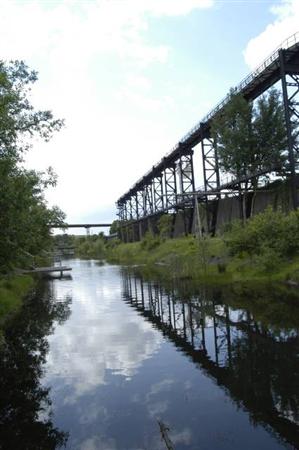
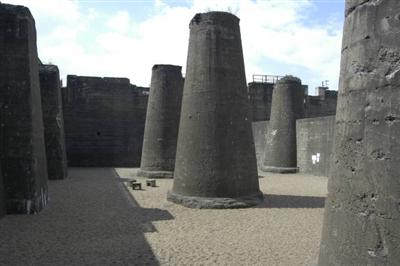
Duisburg Nord is one of Germany’s groundbreaking parks
that took an old steel production district and transformed it into a park. The juxtaposition of old hulking rusted equipment and new park features make for an unique experience.

An overview from their website:
If you are looking for recreation, an exciting experience, education or fun, the Duisburg-Nord Country Park is all you need. At a site where the blast furnace heat was almost unbearable you can now cool down and relax. Young trees and old furnaces overlook a park for everybody and everything – and even more, as you can simply climb to the roof of the Ruhr and enjoy the view, experience top events live in a factory building or track regional history in a world of steel. Welcome to Park Land without frontiers.

db1.jpg

db2.jpg

db3.jpg

db4.jpg

This park has served as an interesting model for other post-industrial cities looking to redevelop their old manufacturing areas.

For More Images:
Details from Gardenvisit


A Calender Correction

It looks like there was a misprint of the first edition calenders that we sent out at the beginning of the year to clients and friends. If you were one of those who are confusedly seeing January in July, you can print and paste a corrected version (download .pdf). Our apologies for the misprint and confusion.


Electric Mowers instead of Gas

There are three types of mowers typically used by homeowners for residential lawn care: Gas powered mowers, electric mowers and manual push mowers (reel mowers).

Gas mowers are used commercially, but can be a headache for homeowners with smaller lawns. Electric mowers offer ease of use and operation and don’t have inefficient polluting engines, but sometimes cut quality is not as high as with gas mowers. Reel mowers offer great cut quality, but don’t bag grass and take sweat effort on the part of the operator (they are great for small lawns).

Some options for electric mowers on the market are:
Black & Decker and Yard Machines.
Hybrid electric reel mowers are also available.

An interesting idea for people who want an electric mower that will mow the lawn for them is this Robotic mower. How this works is a mystery to me, but if it works for vacuums, maybe it can work for lawn care.

For More:
Good listing of Electric Mowers from various manufacturers
A good overview of mowers at About.com

Green Driveways?

GardenDesignOnline had an interesting post on Green driveways with a link to an article from the New York Times. The featured architects, Greenmeadow Architects, in the story are right in our neck of the woods.

As for our take on Green Driveways, they are, of course, more maintenance intensive. The technique they show in the article is better than using the traditional turf paver blocks, where the grass tends to die out over time. Newer styles of turf paving block claim to have helped reduce this problem. There are links in the NYT article to manufacturers. Alternatives include permeable pavements such as Polypavement, Decomposed Granite with natural resin binding agents.


Beautiful White Viburnum in Bloom

I was fooled last week by a deciduous Viburnum that has leaves and foliage similar to a Dogwood. These Viburnum make a nice accent. Other beautiful Viburnum this time of year is Snowball, with their large clusters of flowers

dw.JPG
White Viburnum plicatum from a project installed in Larkspur after a couple years of growth

Commuting Bikers?

I have been riding my bicycle from home to work this week. It is about a 10 mile ride each way from San Rafael to Novato. A few things struck me. First, and this is true of walking as well, biking through a neighborhood gives a completely different perspective than driving. From a landscape perspective this means being able to look at the front yard landscapings (or lack of them of) for the residences along route. It also is a much more sensory experience, a true feeling of distance as it relates to human scale. On Monday the sensory experience was profound as I was drenched from head to toe.

The other curiosity was the lack of bikers on the road. Marin is touted as one of the strongest areas in the country for bicycle activism, such as the Marin Bicycle Coalition, who helped bring home a lot of cash in the latest transportation bill for bike path pilot programs. Marin also has a significant history in the evolution of mountain biking. So why then is it that there are not more bikers commuting on the road? Sure, there are hoards of weekend warriors in west Marin, around the skirt of Mt. Tam, and in China Camp, but where are they during the week?

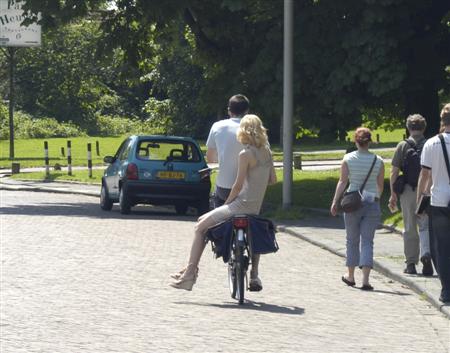
Maybe this is something that is more prevalent in southern Marin, but in the north part of the county, I don’t see very many bikers. We certainly can’t hold a candle to Holland, where bicycling is a means of transport primarily, rather than a recreational pursuit.

bikesm.jpg
When was the last time you saw a scene like this in Marin?

bike2sm.JPG
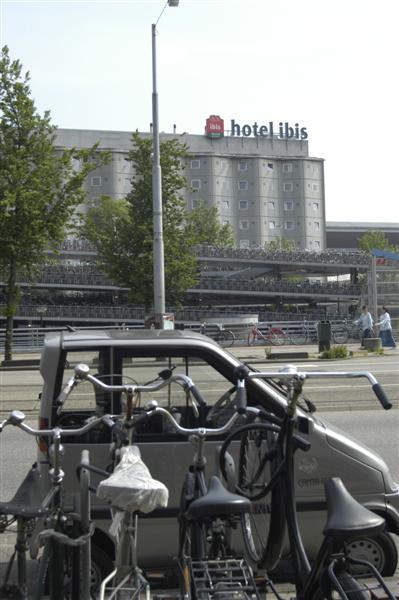
Bikes and a very small car in Amsterdam. The structure in the background is bike parking with 10’s of thousands of bikes

For More:
Southern Marin Bike Route Map from MBC
Northern Marin Bike Route Map from MBC
Marin IJ Article on new bike paths


Rhododendrons from the Mendocino Botanical Gardens

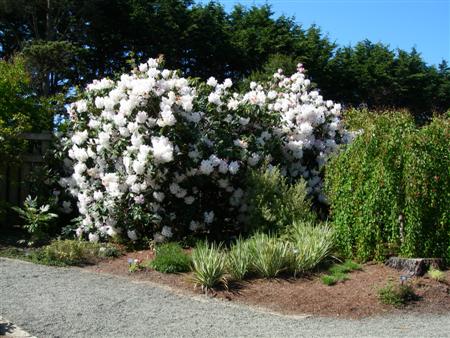
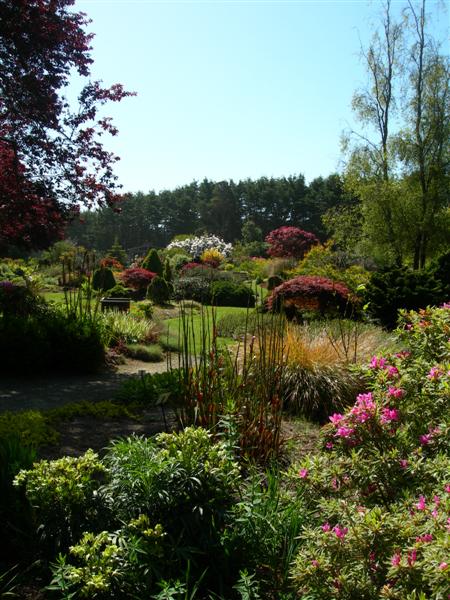
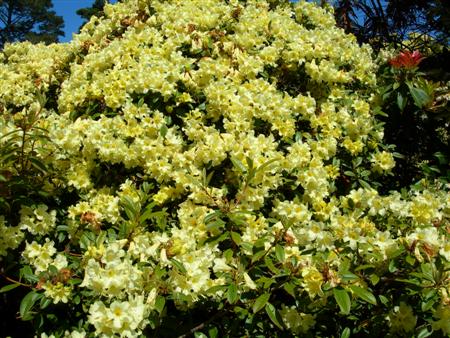
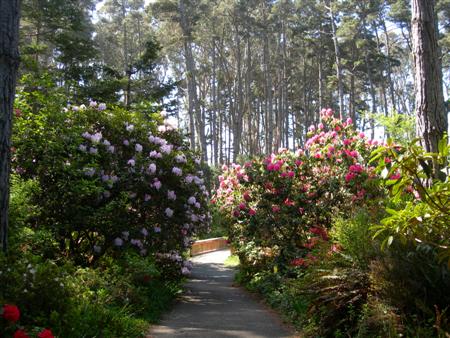
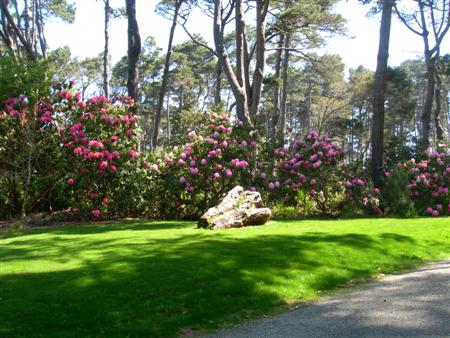
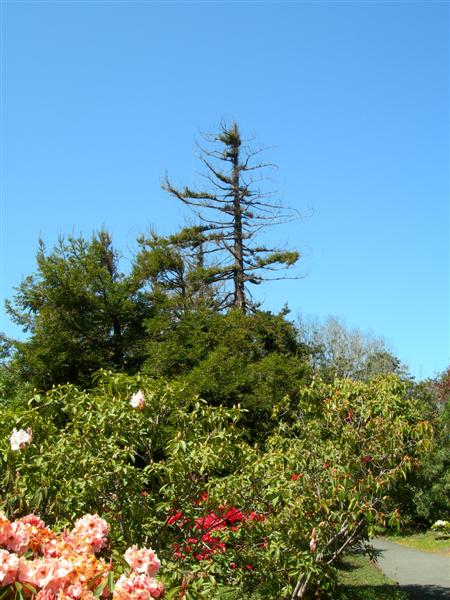
Here are photographs of beautiful spring rhodys from a recent trip to the Mendocino Botanical Gardens. The cool coast air and moist climate make for beautiful specimens. One other interesting specimen was a Coast Redwood at the gardens. Redwoods do not grow well when exposed to salt air, and as a result don’t thrive on the coast.

rh1.JPG

rh3.JPG

rh4.JPG

rh5.JPG

rh6.JPG

rh7.JPG

rh9.JPG
A Coast Redwood with stunted growth as a result of salt exposure near the
coast

rh8.JPG
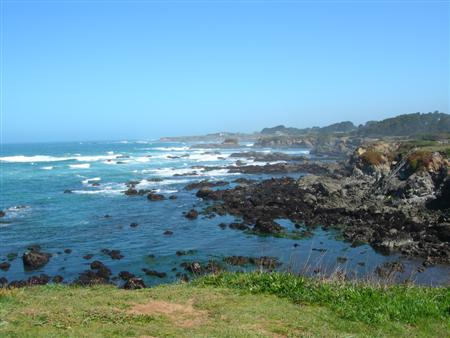
The beautifully rugged Mendocino coast


Turn on the Sprinklers

With sunny skies returning to California, and temperatures in the 80’s, it is time to turn the sprinklers on. Here are a few tips:

1- Check the settings on your controller- It have been a while since they were adjusted. Drip stations should generally have 20 minutes – 1 hour of scheduled watering time a week, divided in 2-4 weekly waterings. This of course depends on the location, solar exposure, plant types, and type of irrigation system that was installed. Once the thermostat starts to climb into the 90’s, increase the frequency and reduce the duration of watering. Soft stemmed plants or plants in pots may even need two waterings to keep from wilting in high temperatures.

Lawns should receive 30 minutes to an hour per week, again depending on conditions and temperature. More frequent waterings 4-6 times per week are typically required in the warm season.

2- Check your sprinklers: Run through the stations of your controller to check for problems. For lawns, check head coverage and distribution. Heads may have rotated out of alignment, or nozzles may have become clogged. For drip systems, turn on the station and listen for leaks, look for wet spots, or squirting water from drip lines. Where plants have grown over the lines listening may be the best way to find leaks. After the air has escaped the lines, listen for the sounds of escaping water. Check the emitters of plants that look dry.

3- Not sure how much to water? Probe the soil- The soil should be moist but not wet. Brush back mulch around emitters to see the amount of water plants are getting from drip systems. If you want a better way to check moisture content, purchase a soil probe from your local garden center.

Check the posting “Scheduling your Controller in Warm Weather” for more watering tips.


A Review of Our Blog

pjm.gif

Our blog was recently reviewed by Brian Brown’s Pajama Market, a blog dedicated to reviews of Small Business blogs.

The review is an interesting critique. For the most part it is favorable of the type of material we post here. With regards to subject matter, he has his critiques, such as my series on biking commuters.

Part of the intriguing nature of landscape architecture as a whole is that it covers a diverse range of topics. From a residential landscape construction perspective, Brian is right, biking to work is not pertinent. From a landscape architecture perspective, urban planning issues and alternative transportation are very relevant.

Our blog is meant to focus on subjects relating to our industry, but there is only some much fodder here for a regular running commentary. We also try to post information that is related in art & design, and items that are of interest to our community. In addition, as Brian notes, the blog is meant to be a more personal and varied look at the goings-on of our company, rather than a formalized newsletter approach. As far as his critique, my only critical reaction is that he could have looked at more of our past postings over the last 10 months, instead of justthe last few weeks. There are some very good posts that have both content and scholarship, rather than just pure content aggregation and links.